Jessica Hallbäck creates public artworks that combine visual storytelling, text and social reflection. Her projects often respond to specific places and communities, sometimes involving workshops or collaboration with local participants. By bringing art into everyday environments, the works aim to spark conversation and create new ways of experiencing shared spaces.
Malmö, Sweden, 2026
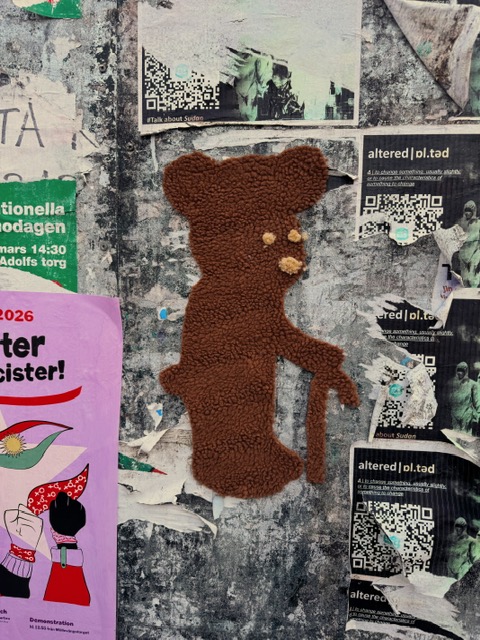
Kronetorp, Burlövs Kommun, Sweden, 2025

The project began with a workshop where the children were invited to reflect on littering in their environment. Through conversations and drawings, they discussed why people leave trash behind and what might encourage adults to take better care of shared spaces.
Their ideas became the starting point for the artworks. Hallbäck translated the children’s thoughts into a series of posters placed in the public environment, allowing the children’s voices to speak directly to the adults who move through the area every day.
By bringing children’s perspectives into the visual landscape of the neighborhood, the project explored how public art can create small moments of reflection, responsibility and care for the places we share.
Malmö, Sweden, 2022
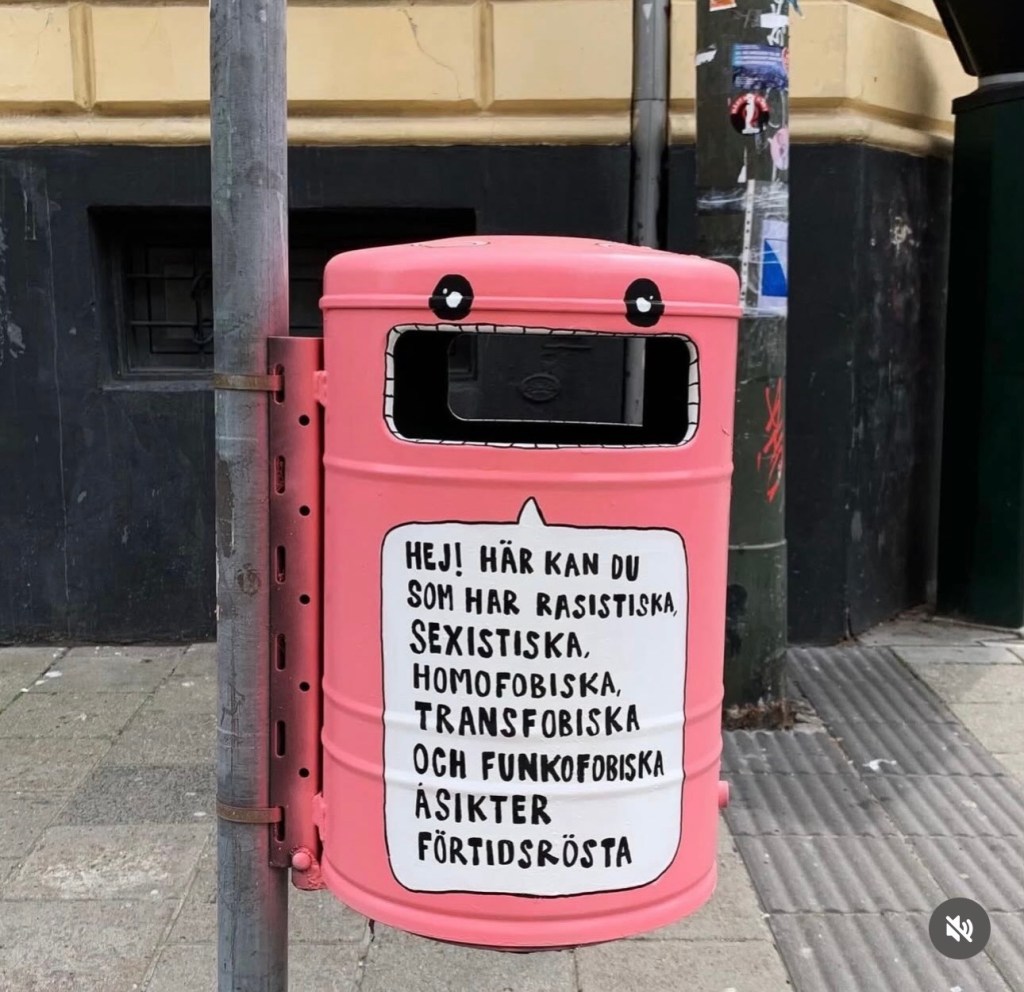
The bin was painted bright pink and given a simple message: people with racist, sexist, homophobic, transphobic or ableist views were invited to “cast their vote” directly into the trash.
Placed in the street, the work turned an ordinary object into a small political stage. By combining humor with a sharp social message, the piece invited passersby to pause, reflect and engage with the values that shape the society we share.
The artwork sparked conversations and debate in the public space, illustrating Hallbäck’s ongoing interest in how art can interrupt everyday environments and create moments of reflection in places people pass through every day.
Malmö, Sweden, 2022

Placed in the everyday urban environment, the piece highlights the often invisible labour that many mothers carry in daily life: caring for children, organizing the home and holding together the routines of family life. Statistics in Sweden show that women still perform the majority of unpaid work in the home, yet this labour is rarely acknowledged.
Through a simple but direct statement in public space, the artwork invites passersby to reflect on how care, responsibility and recognition are distributed in society. By bringing these questions into the street, the work turns an ordinary wall into a quiet reminder of the value of care and the need for greater equality in everyday life.
Malmö, Sweden, 2022

The piece responds to a phrase often repeated to children when a boy teases or pushes a girl: that fighting can be a sign of affection. By reversing this message, the work challenges the normalization of aggression in early relationships and questions how ideas about love and power are passed on from a young age.
Placed directly on a school building, the statement addresses both children and adults who move through the space every day. Through a simple sentence in the urban landscape, the artwork invites reflection on how we talk about relationships, respect and care and how these ideas begin to form already in childhood.
Malmö, Sweden, 2021

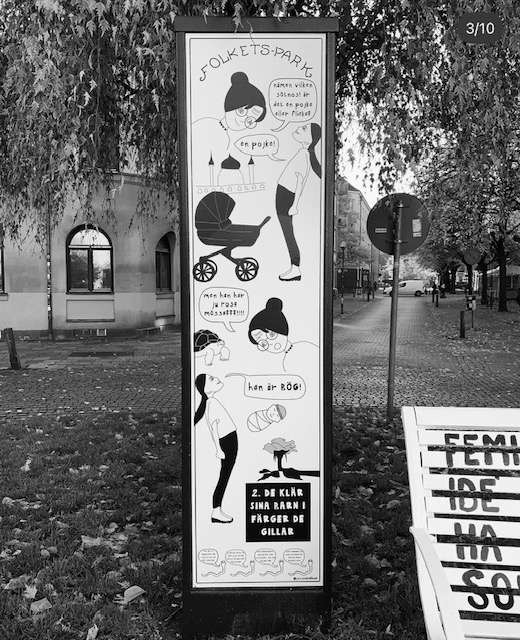

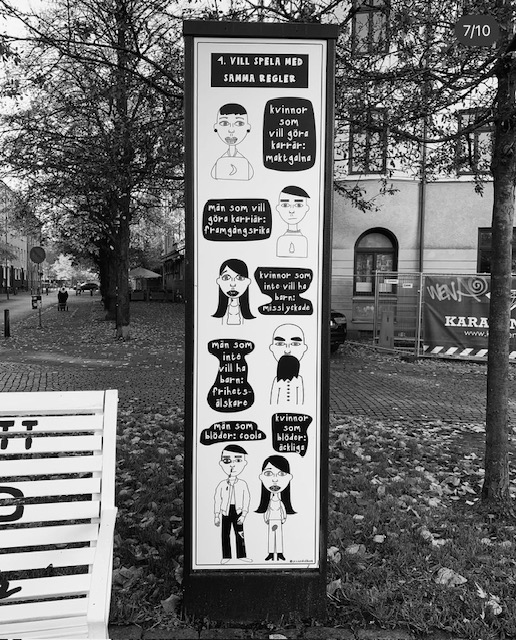


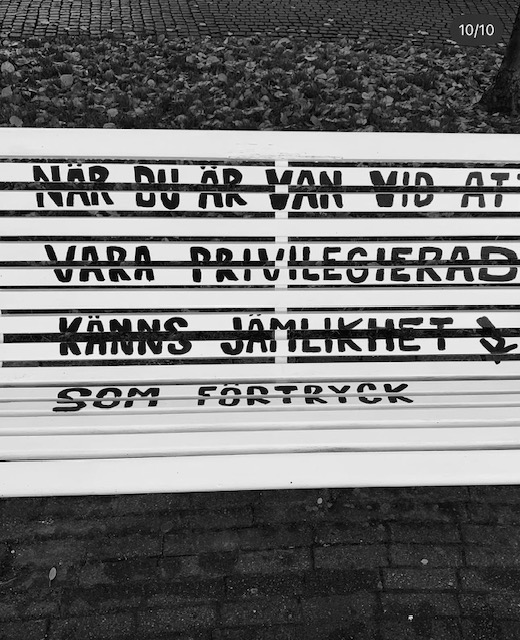
The work forms part of a larger initiative to bring art and illustration into the urban environment and strengthen Malmö’s identity as a city for comics and visual storytelling. Through color, text and illustration, Hallbäck transformed an ordinary piece of street furniture into a visual pause in the everyday flow of the city.
Placed in the middle of traffic, the artwork becomes something people encounter briefly but repeatedly: cyclists, pedestrians and drivers passing by are invited to notice it, reflect for a moment and carry the thought with them. Like much of Hallbäck’s work in public space, the piece explores how art can interrupt the routines of daily life and introduce new perspectives into places that are usually overlooked.
Stockholm, Sweden, 2017
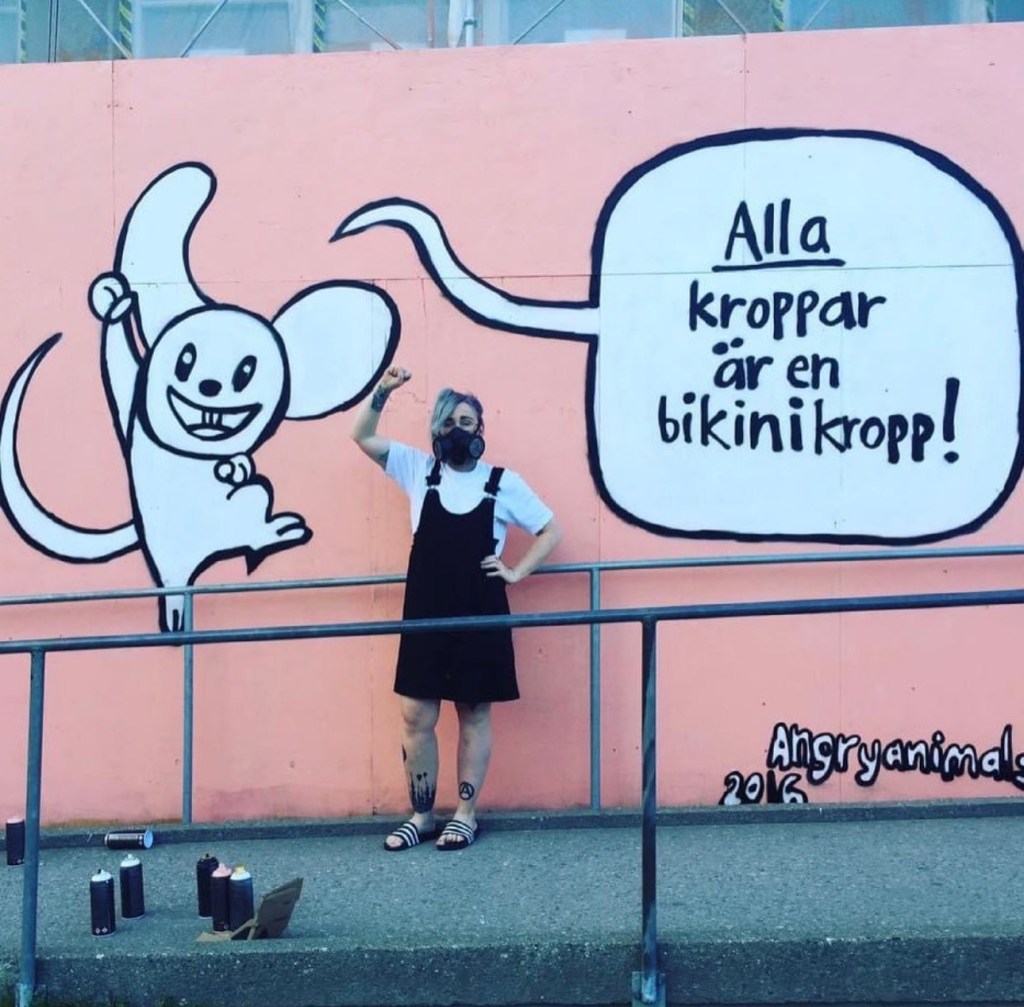
Created in the middle of summer, when families and children frequently visit the museum, the work was intended to spark conversations about body image and self-acceptance. By placing the message in a public space often shared by parents and children, the artwork invites reflection on how we talk about bodies, confidence and belonging.
Using humor, color and a friendly character, the piece transforms a familiar cultural debate into something accessible and approachable for younger audiences. Like much of Hallbäck’s work in public space, it uses simple imagery and direct language to open up dialogue in everyday environments.
Söderhamn, Sweden, 2018

By placing artworks in everyday public spaces, the exhibition blurred the line between the gallery and the street. Passersby could encounter the works unexpectedly as part of their daily routines, reflecting Hallbäck’s long-standing interest in how art can exist both inside institutions and directly in the public realm.
For Hallbäck, the choice of location is central to the work itself. Public space becomes part of the artwork a place where people who might never visit a museum can still encounter art, pause for a moment and engage with the ideas it carries.
Adbusts in the Stockholm Subway
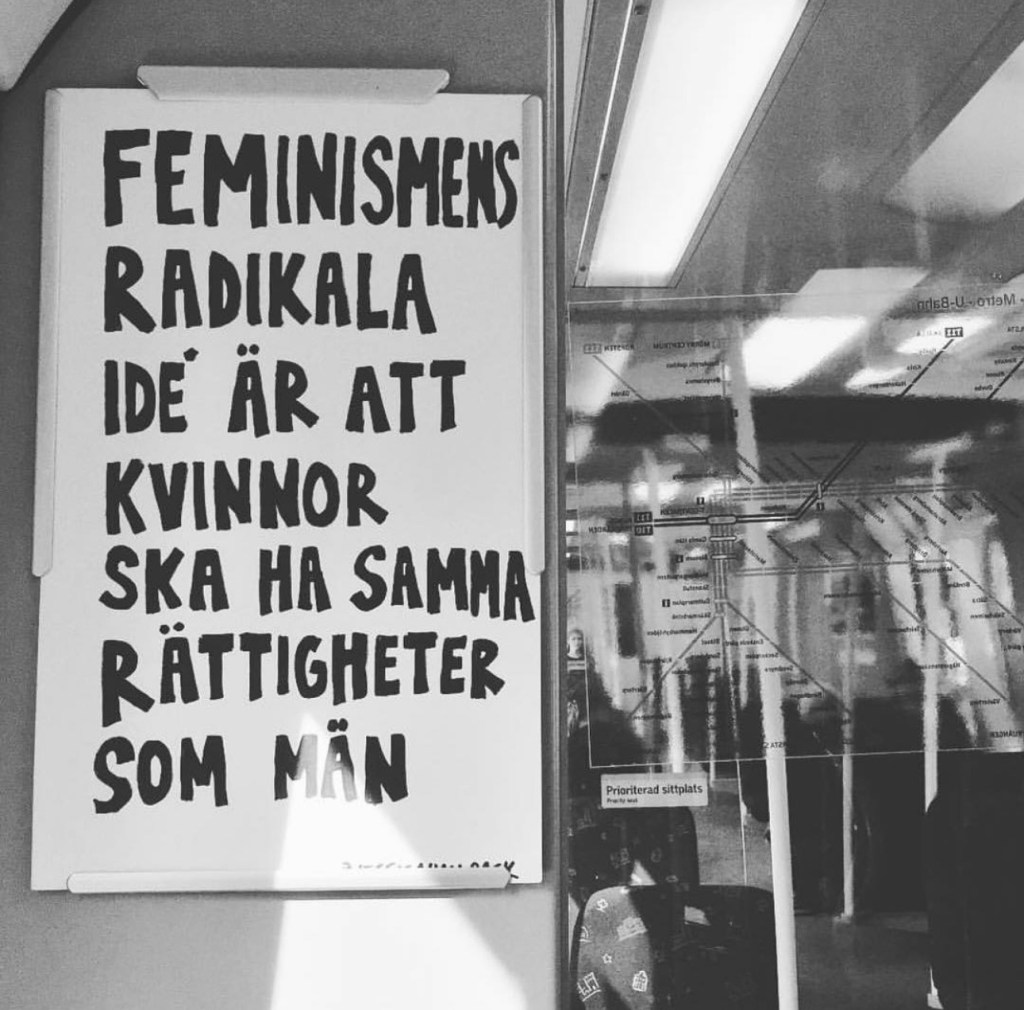
Using humor, sharp social commentary and a distinctive hand-drawn style, the works addressed themes such as feminism, power structures and everyday inequality. The interventions appeared directly in the spaces people pass through daily, allowing art and political commentary to enter the routines of urban life.
The pieces were photographed and widely shared on social media, reaching audiences far beyond the subway system. Through these works, Hallbäck explored how simple visual gestures in public space can interrupt the flow of everyday life and open up conversations about society.